
Timber Pergola Installation in Ipswich – Natural Charm & Lasting Quality
Custom Timber Pergolas in Ipswich – Designed for Queensland Homes
There’s something different about a timber pergola. Walk under one and you feel it straight away — that warmth, that natural character, the way the grain and the colour make the whole space feel genuinely inviting rather than just functional. No other material does that. Steel’s strong, aluminium’s low maintenance, but timber? Timber brings the garden into the structure itself.
Ipswich homes suit timber pergolas beautifully. The classic Queensland timber houses across Karalee, Barellan Point, and the older established suburbs were practically built for this kind of outdoor structure. And even the newer project homes in Springfield Lakes and Ripley Valley come alive when a properly built timber pergola ties the backyard together.
We’re the local team that builds timber pergolas the right way — right species, right construction, genuine care for how it looks and performs for years to come.
Why Timber? What It Brings That Nothing Else Can
Natural Warmth That Changes the Whole Space
Timber brings a warmth to an outdoor area that no manufactured material can replicate. The grain, the colour, the natural variation — it makes a pergola feel like it belongs there rather than something bolted on as an afterthought.
It Ages Beautifully When You Choose the Right Species
A quality hardwood pergola doesn’t deteriorate — it matures. The colour deepens, the character builds, and when it’s properly cared for it looks better at ten years than it did at one. That’s genuinely rare in any building material.
Connects the Structure to the Garden
Timber is the only pergola material that feels like it grew out of the landscape rather than being placed in front of it. Climbing plants, surrounding garden beds, lawn — timber ties it all together in a way that feels natural and intentional.
Suits Almost Any Style
Rustic and relaxed, sleek and contemporary, classic Queensland character — timber works across all of them. You can shape it, profile it, stain it, and finish it to match almost any home style. That versatility is something steel and aluminium simply can’t offer.
Yes, It Needs Maintenance — And It’s Worth It
Timber needs more care than other materials. That’s the honest trade-off. But for homeowners who want something genuinely beautiful rather than just functional, it’s a trade-off that makes complete sense. The reward is a pergola that looks and feels like no other.
Council and Compliance — What You Need to Know in Ipswich
Pergolas in Ipswich may require building approval from Ipswich City Council depending on the size, height, and position on the property. Some smaller structures fall within exempt development provisions and don’t require a formal application — others do, and getting that wrong can create real problems down the track.
We check the approval requirements for every timber pergola we build before work starts. Where an application is needed, we handle that process — so you’re not left navigating council requirements on your own.

Timber Species — What We Build With and Why It Matters
Merbau — The Standout Choice for Queensland
Merbau is the timber pergola species of choice for Queensland conditions and there’s a very good reason for that. It’s naturally termite-resistant, exceptionally durable, and it handles humidity and UV in a way that most timbers simply don’t. The colour is rich and warm straight off the saw and it deepens to a gorgeous reddish-brown over time. For Ipswich homeowners who want a hardwood pergola that performs as beautifully as it looks, Merbau is the starting point of the conversation.
Spotted Gum and Ironbark — Character and Strength
Spotted gum and ironbark bring their own personality to a pergola build. Spotted gum has that distinctive figuring and colour variation that makes every piece genuinely unique. Ironbark is one of the densest and hardest Australian hardwoods available — a pergola built from ironbark is built to genuinely last. Both species suit a slightly different aesthetic to Merbau and both are exceptional choices for homeowners who want something with real Australian character.
Treated Pine — Quality Without the Premium Price
Treated pine gets overlooked sometimes but it’s a genuinely solid option for timber pergolas, especially those in sheltered positions or for homeowners who want the warmth and character of timber without the cost of premium hardwood. Quality treated pine, properly finished and maintained, builds a pergola that looks great and performs well. It’s the practical timber choice and there’s nothing wrong with practical.
We Advise on the Right Species for Your Specific Build
Every property is different. The position of the pergola, the sun and weather exposure, the style of the home, and the budget all factor into which species is the right call. We talk through all of that before anything gets ordered — because getting the species right at the start is what makes the finished pergola genuinely worth building.

Design and Construction — How We Build Timber Pergolas
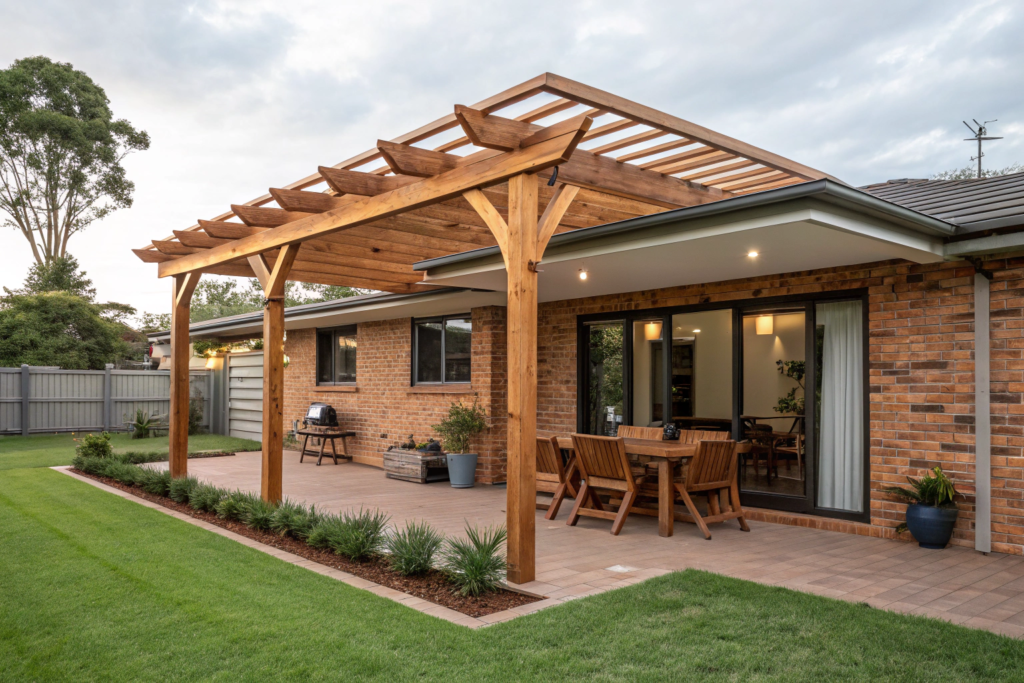
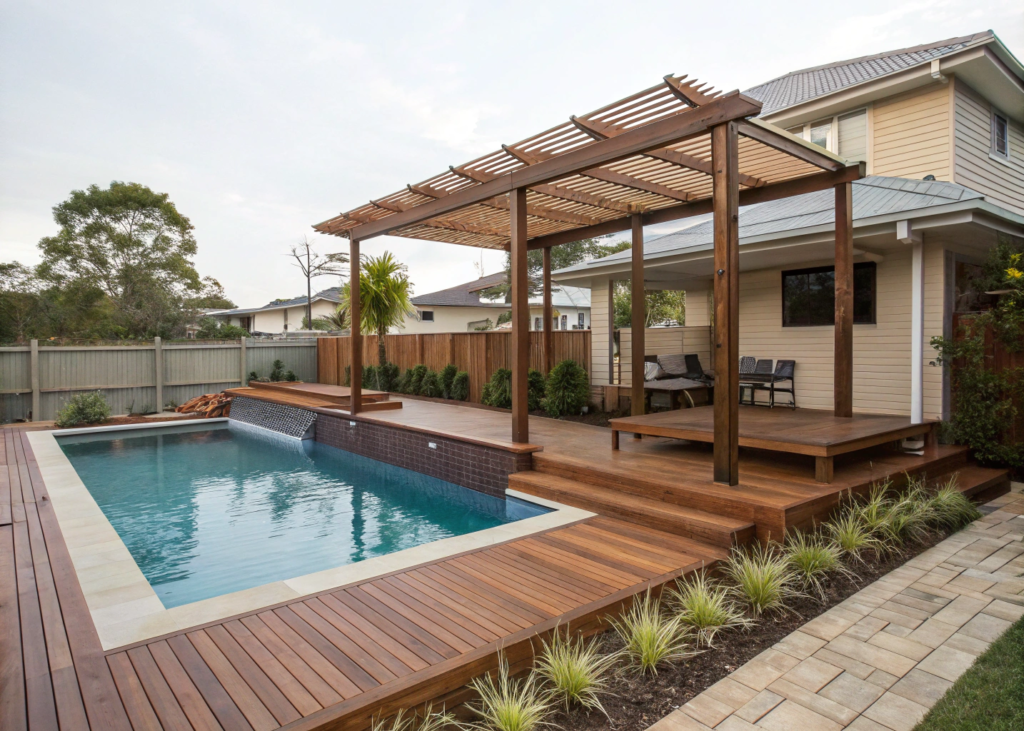
Designed to Suit the Property: Every timber pergola we build starts with the property, not a template. Size, position, how it connects to the house or sits as a freestanding structure in the garden, how it relates to the existing outdoor space — all of that shapes the design before a single piece of timber gets ordered.
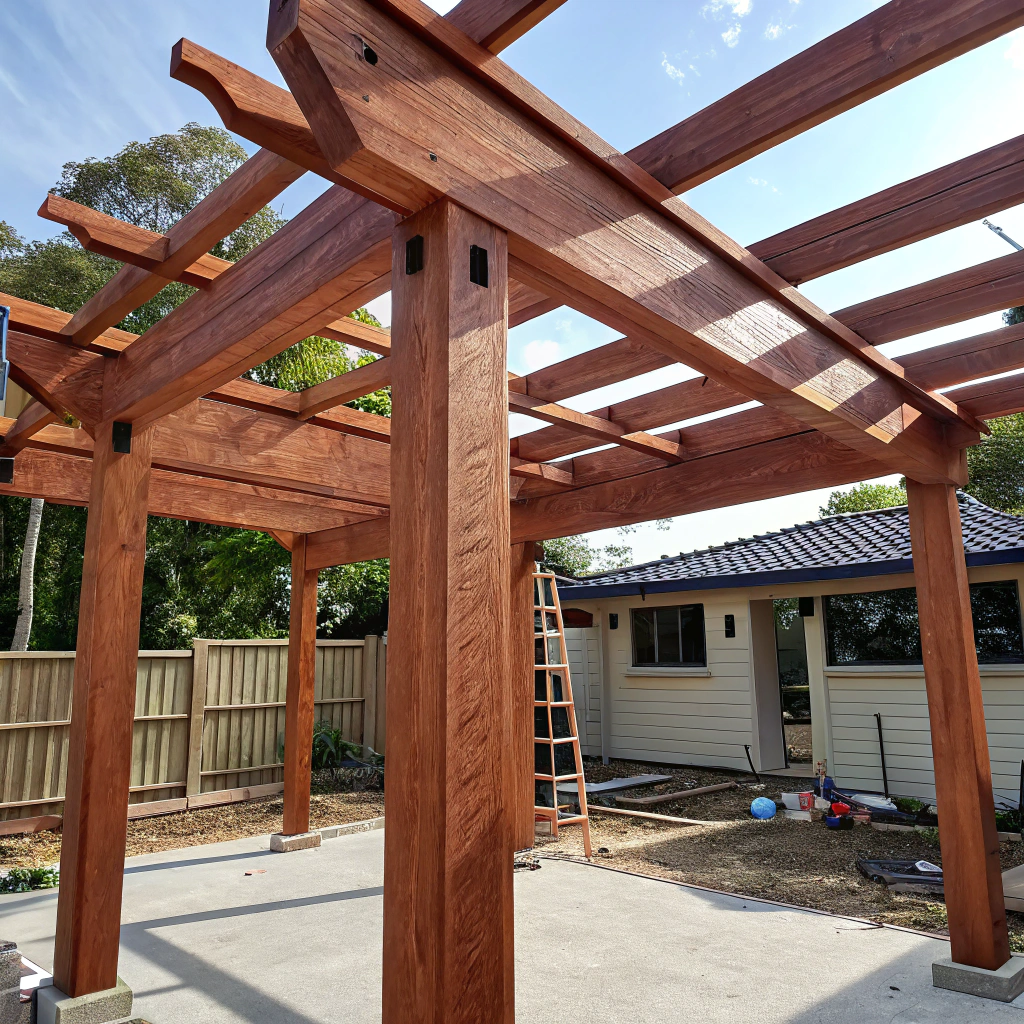
Posts, Beams, and Rafters — Sized and Joined Properly: The structural elements of a timber pergola — the posts, the beams, the rafters — need to be sized correctly for the span and load they’re carrying. Under-built pergolas flex, settle, and look wrong even when they’re new.
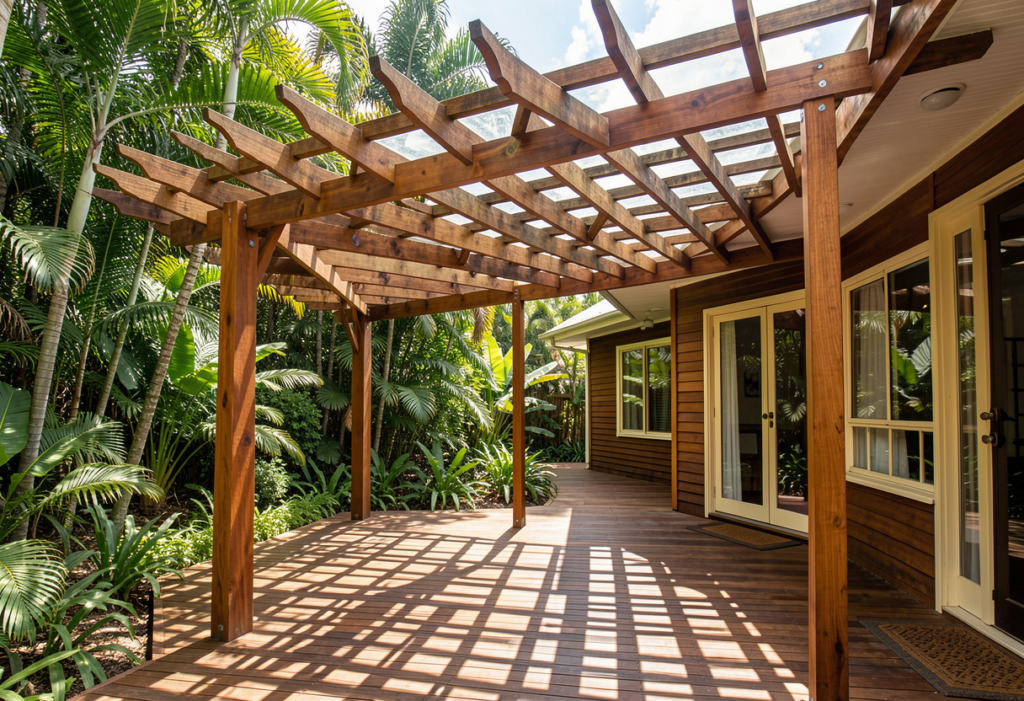
Open Beam or Covered Roof: The classic timber pergola look is open beam — rafters running across the top, filtering light through, casting beautiful shadow patterns across the space below. For homeowners who want more weather protection, we build with solid or semi-solid roofing integrated into the timber frame.
The Finishing Details That Make It Look Handcrafted: The details are where a timber pergola moves from assembled to crafted. The way the post tops are shaped. The way the beam ends are profiled rather than just square-cut. The way the edges are finished and the corners are detailed.
Maintenance and Care — What Owning a Timber Pergola Involves
Oiling and Sealing — Keeping the Timber Protected
The primary maintenance task for a timber pergola is oiling or sealing on a regular schedule. In Queensland’s sun and humidity, this is what keeps the timber from drying out, fading, or cracking. A good penetrating oil — products like Cutek or Intergrain work exceptionally well for Merbau and hardwood species — soaks into the timber and protects it from the inside out rather than just sitting on the surface.
How Often Does It Actually Need Doing?
For most timber pergolas in Ipswich’s conditions, an oil or seal every 12 to 18 months is the right schedule. Some exposed northern or western-facing structures may need attention closer to the 12-month mark. Once the routine is established it takes an afternoon and the difference in how the timber looks afterwards is immediately obvious.
A Well-Maintained Timber Pergola Is Genuinely Stunning
Here’s the honest truth about timber maintenance — homeowners who stay on top of it consistently say they actually enjoy it. It’s satisfying, the results are immediate, and knowing the pergola is protected gives real peace of mind. A timber pergola at ten years, properly maintained, looks rich and full of character. That doesn’t happen with any other pergola material.
FAQs About Timber Pergola Installation in Ipswich
Most residential timber pergola builds in Ipswich take between 3 to 5 days on site depending on size and complexity. A straightforward Merbau pergola off the back of a Springfield Lakes home is generally quicker than an elevated structure on a sloping Karalee block. We’ll give you a realistic timeline before work starts so you can plan around it. No vague “a few weeks” answers — you’ll know exactly what to expect.
A standard timber pergola in Ipswich typically starts around $8,000 to $12,000 for a modest treated pine structure and moves up from there depending on species, size, and design complexity. A Merbau or spotted gum pergola with quality finishing details sits more in the $15,000 to $25,000 range. Every property is different so the best thing I can do is come out, look at the space, and give you a straight itemised quote. That way there are no surprises when the job starts.
Yes — when it’s built properly with correct structural sizing and properly fixed connections, a timber pergola handles Queensland storm conditions well. The key is getting the post footings, beam sizing, and fixing hardware right from the start, which is exactly what we focus on during construction. Cheap or under-built pergolas are the ones that move around in big winds — a well-built hardwood structure is genuinely solid. We build to Queensland’s wind loading requirements so you’re not worrying every time a storm rolls through.
Absolutely — and it’s actually something worth thinking about at the design stage even if you’re not adding it straight away. If we know a Colourbond or polycarbonate roof is coming later, we can size the beams and posts to handle that load from day one so there’s no retrofitting or reinforcing needed down the track. A lot of Ipswich homeowners start with an open beam pergola and add a roof after the first summer once they’ve lived with the western afternoon sun. Planning for it upfront saves money in the long run.
It’s the question every Queensland homeowner asks and it’s a fair one given how active termites are across Ipswich and the broader southeast corner. Merbau is naturally termite-resistant which is a big part of why I recommend it so strongly for local conditions. Treated pine used in pergola construction is also treated specifically for termite resistance. I also recommend maintaining a clear inspection zone around the base of the posts so any termite activity is visible early — that’s just good practice on any Queensland property.
Yes, and sloping blocks are actually very common across Ipswich — particularly in Karalee, Barellan Point, and Basin Pocket where the elevated Queenslander-style homes sit on some serious gradients. A sloping block just means the posts need to be set at different heights to create a level structure, which is completely standard in our builds. The finished result looks just as good — sometimes better — because the elevation gives the pergola a real presence in the garden. We assess the site properly before quoting so the slope is factored into the price upfront, not added on later.
A Timber Pergola Built for Your Ipswich Property — Get a Free Quote
A timber pergola is one of the most charming and genuinely inviting outdoor structures a home can have. When it’s built with the right species, detailed with care, and maintained properly over the years — it becomes a permanent favourite part of the property. Not just a structure, but a place.
Ipswich homeowners who want a timber pergola built the right way are welcome to get in touch for a free consultation and quote. We’ll talk through the species options, the design, the position on your property, and what the build involves — no obligation, no pressure, just a straight conversation about what you’re after.