
Ipswich's Trusted Deck Builder – Quality Decking for Every Home
We build decks across Ipswich that actually handle the climate here. The strong summer sun, high humidity through the wet season, and those sudden heavy downpours that roll through – these conditions break down cheaper decks fast if they’re not built right from the start.
As a local deck builder in Ipswich, we see what works and what doesn’t. The timber that holds up year after year. The fixings that don’t corrode in the humidity. The species that termites avoid. We’re not working off a Brisbane template or guessing at what Ipswich needs – we’re building decks in Springfield Lakes, Karalee, Redbank Plains, and right across the region every single week.
Most families who contact us have lived with a basic concrete patio or a builder’s cheap pine deck that’s already fading to grey. They want something better – an outdoor space they can actually use for weekend BBQs, somewhere the kids can run around barefoot without splinters, a deck that doesn’t turn into a furnace by 11am.
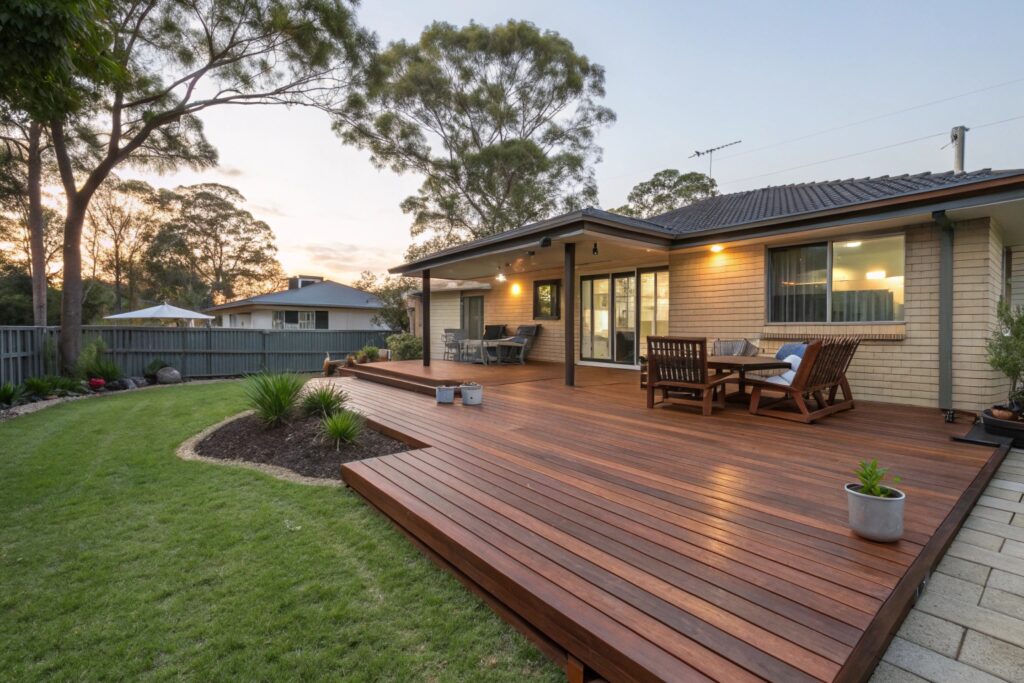
We build all types of decks. Elevated entertaining areas for highset homes. Multi-level decks around pools. Ground-level entertaining spaces. Timber, composite, hardwood – whatever fits your property, budget, and how much time you want to spend on maintenance. And we handle the full process, including council approvals when they’re needed for larger decks or specific zones.
Decking Services We Provide Across Ipswich
We work with both timber and composite materials depending on what makes sense for your property and budget. Merbau decking is popular across Ipswich for its natural durability and rich colour – handles the heat well and resists termite damage better than softer timbers. Treated pine decking is the most affordable timber option and works perfectly for ground-level decks or covered areas where UV exposure is limited. For premium builds, we install hardwood decking using species like Spotted Gum and Ironbark – these timbers last decades and develop a beautiful silver-grey patina if left untreated.
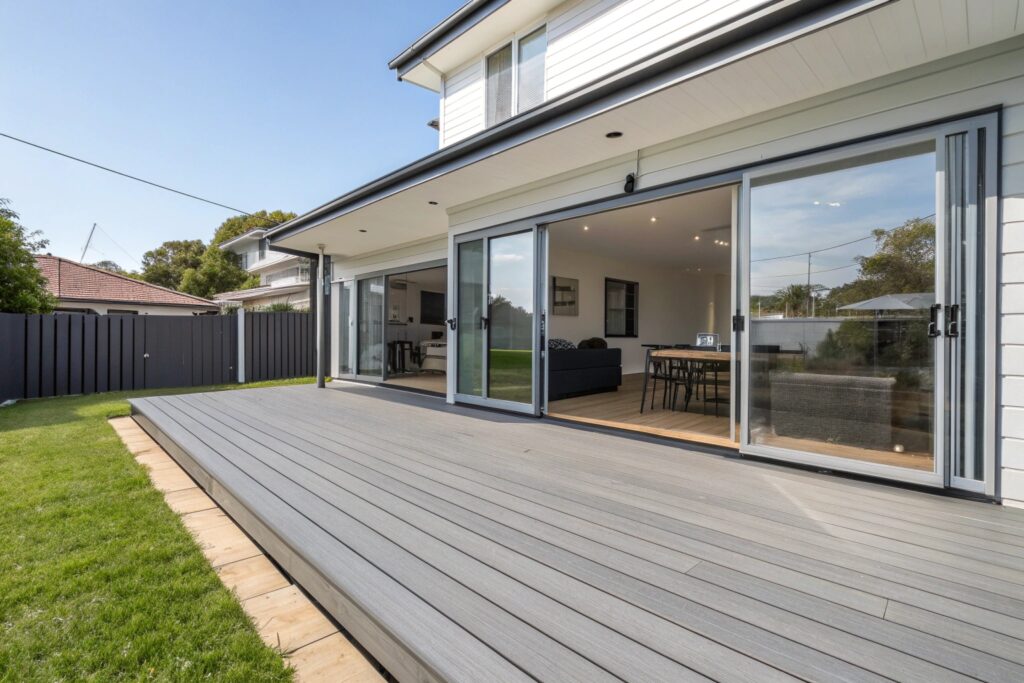
On the composite side, ModWood decking and Ekodeck decking are both engineered to handle Queensland’s humidity without warping, cupping, or fading. They cost more upfront but need zero oiling or sanding – set and forget. We install both depending on your colour preference and budget.
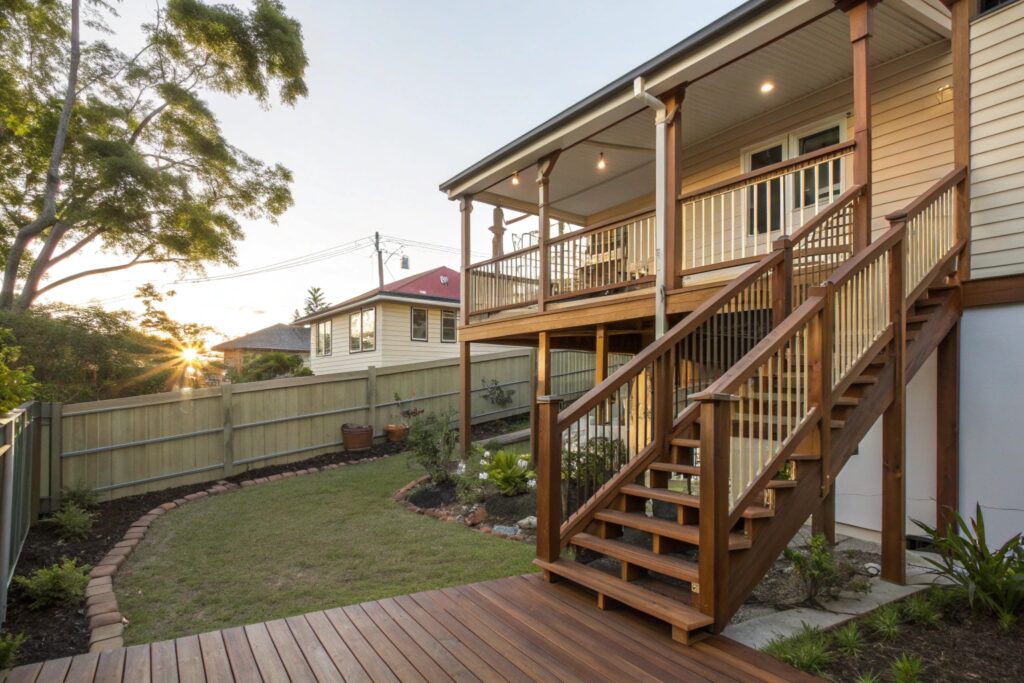
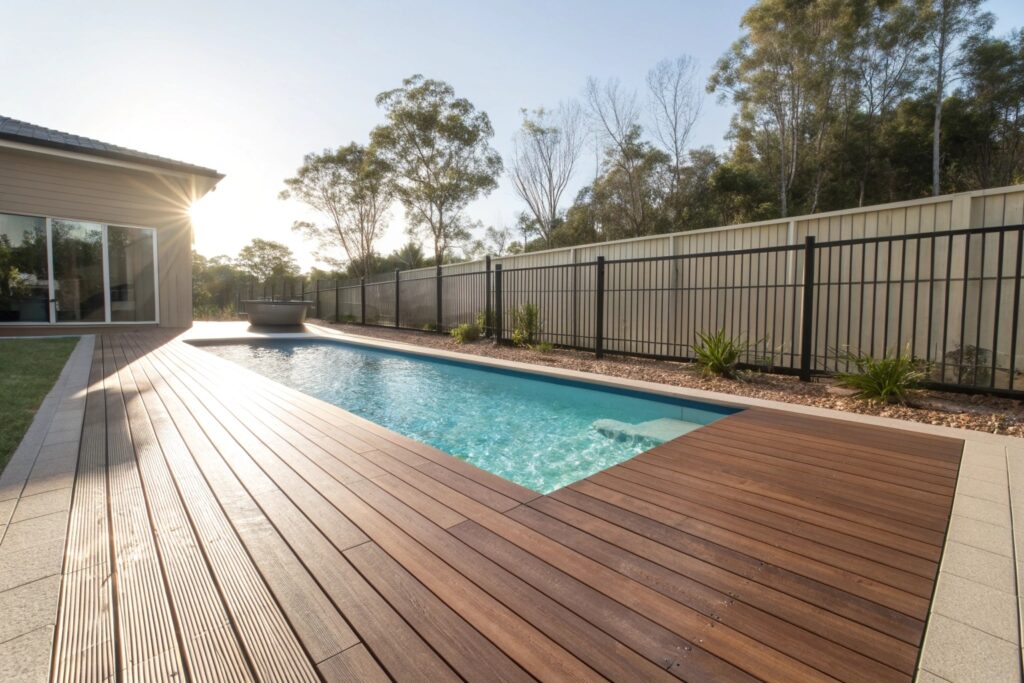
When it comes to structure, we build elevated decks for highset Queenslanders and sloping blocks common around Karalee and Barellan Point. Ground-level decks work for modern estates in Springfield and Ripley where the house sits on a concrete slab. Multi-level decks are ideal when you need separate zones – entertaining area up top, kids’ play space below. Pool decking is a big part of what we do, building slip-resistant timber or composite surrounds with integrated steps and seating. We also construct balcony decks off upper-storey bedrooms or living areas.
If you’ve already got a deck, we handle deck extensions to increase your entertaining space, deck repairs for rotted boards or structural issues, and deck restorations to bring old timber back to life. When a deck is beyond repair, we provide deck demolition and removal before starting fresh.
Why Ipswich Homeowners Choose Us
We’re based here and we understand what Ipswich conditions do to outdoor structures. The afternoon sun coming from the west can make poorly planned decks unbearable by 2pm. The humidity sitting between 65-85% through summer causes cheaper timber to twist and gap. And termite pressure across the region means species selection and treatment isn’t optional – it’s the difference between a deck that lasts 20 years and one that needs replacing in five.
We handle Ipswich City Council compliance for every deck we build. Depending on your deck size, height, and proximity to boundaries, you might need council approval before construction starts. We know the setback rules, the height restrictions, and when a development application is required versus when it’s exempt. We manage that process for you so the deck gets built to code and passes inspection first time.
Our team has built hundreds of decks across Springfield Lakes, Karalee, Goodna, Redbank Plains, Yamanto, and the wider Ipswich region. We know the soil types, the drainage issues on sloping blocks, the wind exposure on elevated sites. That local knowledge means fewer surprises during construction and better long-term performance.
We don’t disappear after the build. Warranties are written and backed up. If boards move or fixings fail within the warranty period, we come back and fix it. And we’re clear about maintenance requirements upfront – timber needs oiling, composite doesn’t, but both need occasional cleaning. No surprises six months later when you realise what you’ve actually signed up for.
Timber or Composite – What Works for Ipswich
The two main choices are timber or composite, and both work well in Ipswich when installed properly. The difference comes down to maintenance time and upfront cost.
Timber decking – whether it’s Merbau, hardwood, or treated pine – costs less initially and gives you that natural timber look and feel. Merbau runs around mid-range in price and handles the heat and termites better than pine. Hardwoods like Spotted Gum and Ironbark cost more again but they’re tougher and last longer. All timber needs maintenance though. You’re looking at oiling or staining every 12-18 months to keep the colour and protect the surface. Skip that and the boards fade to grey, dry out, and can start to splinter. If you don’t mind spending a weekend each year with a brush and some decking oil, timber gives you great value.
Composite decking – ModWood and Ekodeck are the main brands we install – costs roughly 40% more than Merbau but you never oil it, never sand it, never worry about splinters. It handles Ipswich humidity without warping or cupping. The newer composites also resist heat better than older versions, so they don’t become too hot to walk on barefoot during summer. Colour stays consistent for years. If you work full-time and want a deck you can ignore except for an occasional hose-down, composite makes sense.
Both are termite-resistant when installed correctly. Timber through species choice and treatment, composite because there’s no timber for termites to eat

How the Process Works
We keep the process simple and handle the complicated parts for you. Here’s how a deck project runs from start to finish.
Consultation and site assessment – We come to your property, look at the space, measure up, check the slope and drainage, and talk through what you actually want the deck to do. Entertaining area, pool surround, elevated platform off the living room – whatever it is, we figure out what structure and materials fit. You get honest advice about what works and what doesn’t based on your budget and the site conditions.
Design and quote – We put together a detailed quote that breaks down materials, labour, and any extras like pergola posts, built-in seating, or stairs. No hidden costs. You know exactly what you’re paying for. If the deck requires council approval, we let you know at this stage and factor that timeline into the schedule.
Council approvals – For decks over a certain size or height, or decks within specific setback zones, Ipswich City Council requires a development application or compliance certificate. We handle the paperwork, submit the plans, and deal with any back-and-forth with council. This step can add 4-6 weeks to the timeline depending on council workload, but it means your deck is legal and won’t cause issues down the track.
Construction – Once approvals are through (if needed), we schedule the build. Most decks take 1-2 weeks depending on size and complexity. We clean up daily and remove all waste at the end.
Finishing and handover – Final inspection, any touch-ups, and we walk you through maintenance requirements before handing over your new deck.
Design Options That Fit Your Property
Every Ipswich property is different and we build decks to match. The deck that works for a highset Queenslander in Karalee looks nothing like what you’d build around a pool in Springfield Lakes, and that’s how it should be.
Elevated decks are common across older suburbs where homes sit 2-3 metres off the ground. We build the substructure to support the load properly, with treated timber or steel posts set in concrete footings. Handrails and balustrades need to meet Queensland Building Code height requirements – 1 metre minimum for elevated decks. We can integrate stairs leading down to the yard, or create multiple levels if the slope allows it.
Pool surrounds need slip-resistant surfaces and proper drainage. We typically use grooved timber or textured composite for grip when wet. The deck can wrap around the entire pool or just cover one or two sides depending on budget and space. Built-in bench seating is popular – gives you somewhere to sit that doesn’t take up floor space. Pool fencing requirements also influence the design, especially around gates and access points.
Ground-level entertaining decks are straightforward and cost-effective. They suit modern estates where the house is on a slab and you want an outdoor room extending from the living area. We can add pergola posts at the build stage if you’re planning shade down the track.
Multi-level designs work well on sloping blocks or when you want separate zones – upper deck for entertaining, lower deck as a landing or kids’ play area. The levels can step down following the slope or create flat platforms at different heights.
What to Expect with Maintenance
How much work your deck needs depends entirely on the material you choose. Get this wrong and you’ll spend every spring cursing the decision.
Timber decks need regular maintenance to stay in good condition. Merbau, hardwood, and treated pine all need oiling every 12-18 months. Skip it and the timber dries out, fades to grey, and starts to check and splinter. Before you oil, you’ll need to clean the surface with a deck cleaner or light sand to remove dirt and weather damage. It’s not complicated work but it takes a full weekend for a decent-sized deck. Some owners like the weathered grey look and leave timber untreated – that’s fine, but you still need to check for loose boards, protruding nails, and structural movement every year.
Composite decks are low-maintenance but not zero-maintenance. You don’t oil them, but you do need to sweep off leaves and debris regularly. Ipswich gets plenty of gum trees dropping leaves and bark, and if that sits on composite for weeks it can stain. A hose-down every few months keeps the surface clean. Check under the deck annually for wasp nests and make sure drainage is still working – standing water under any deck causes problems eventually.
Both materials benefit from a quick inspection each year. Look for loose fixings, check the substructure timber for rot or termite activity, make sure handrails are still solid. Catching small issues early saves money compared to major repairs later.
What Affects Deck Costs in Ipswich
Deck pricing isn’t random but it’s also not straightforward. Several factors push the cost up or down, and understanding them helps you budget properly instead of getting sticker shock when quotes arrive.
Material choice is the biggest variable. Treated pine is the cheapest timber option, starting around $200-$250 per square metre installed for a basic ground-level deck. Merbau sits mid-range at $300-$400 per square metre. Premium hardwoods like Spotted Gum or Ironbark can hit $450-$550 per square metre. Composite decking (ModWood, Ekodeck) runs $400-$600 per square metre depending on the product range and colour.
Elevation and substructure add significant cost. A ground-level deck on flat ground is straightforward – concrete footings, basic framework, decking boards. An elevated deck 2-3 metres high needs taller posts, more bracing, structural engineering for load calculations, stairs, and compliant handrails. That complexity can double the price per square metre compared to a ground-level build.
Size and shape matter too. A simple rectangular deck is efficient to build. Add angles, curves, cut-outs around trees, or multiple levels and you’re increasing labour time and material waste. Built-in features like bench seating, planter boxes, or integrated lighting also add to the total.
Council approval costs vary depending on whether your deck needs a development application or just a compliance certificate. Budget $500-$1500 for council fees and engineering reports if required. Not every deck needs approval, but larger decks or those close to boundaries usually do in Ipswich.
Common Deck Issues Across Ipswich Properties
We see the same problems show up repeatedly on older decks around Ipswich, and most of them come down to cheap materials or shortcuts during the original build.
Termite damage is the big one. Ipswich sits in a high termite activity zone and untreated pine decks can be compromised within 5-7 years. We’ve pulled up deck boards that look fine on top but the joists underneath are hollowed out. If you’ve got an existing timber deck and you’re not sure of the species or treatment, get it inspected. Replacing a few boards now is cheaper than rebuilding the entire substructure when it collapses.
Rotting substructure timber happens when inadequate drainage lets water pool under the deck. The bearer and joist timber sits wet for weeks and starts to rot. This is fixable if caught early – replace the affected timber and improve drainage. Left too long and you’re looking at a full rebuild because the structure isn’t safe.
Board cupping and warping comes from using cheap pine or incorrectly installed timber. Boards need proper spacing for expansion and contraction. Too tight and they buckle when humidity makes them swell. Too wide and they shrink back leaving dangerous gaps. We see this constantly on owner-builder decks or quick jobs done by unlicensed contractors.
Faded, splintered surfaces are just what happens when timber isn’t maintained. The UV breaks down the lignin in the wood, it goes grey, dries out, and splinters develop. That’s fixable with sanding and oiling but if it’s gone too far, boards need replacing.
Frequently Asked Questions
Depends on the size, height, and location on your property. Decks under 10 square metres and less than 1 metre high are usually exempt. Anything larger, higher, or within specific setback distances from boundaries typically needs approval from Ipswich City Council. We assess this during the consultation and handle the paperwork if required.
Merbau and hardwood decks last 20-30 years with proper maintenance. Treated pine lasts 10-15 years. Composite decking can go 25+ years with minimal upkeep. The climate here – humidity, UV exposure, termite activity – means material choice and maintenance actually matter.
If you’re happy to oil the deck every year or so, timber is cost-effective and looks great. If you want zero maintenance, composite costs more upfront but saves time and money long-term. Both work fine in Ipswich humidity when installed correctly.
Ground-level treated pine decks start around $200-$250 per square metre. Merbau runs $300-$400 per square metre. Elevated decks, hardwood, and composite all cost more. A typical 6×4 metre deck ranges from $8,000 to $20,000 depending on materials and complexity.
Yes. We assess the current structure first to make sure it’s sound enough to extend or worth repairing. Sometimes a full rebuild makes more sense than patching up failing timber
Get a Free Quote on Your Ipswich Deck
If you’re ready to upgrade your outdoor space or fix an existing deck that’s seen better days, we can help. We provide free quotes across Ipswich and surrounding suburbs – Springfield Lakes, Karalee, Redbank Plains, Goodna, Yamanto, Ripley, and everywhere in between.
The quote includes a site visit, measurements, material recommendations based on your budget and how you’ll use the deck, and a breakdown of costs so you know exactly what you’re paying for. No pressure, no obligation. You get the information you need to make a decision that works for your property and finances.
We handle the full process – design, council approvals if needed, construction, and cleanup. You deal with one team from start to finish, not multiple contractors passing the job around.
Ipswich properties need decks built for the local climate. High summer heat, humidity that makes timber move, termite activity that’s genuine across the region. We build decks here every week and we know what holds up and what doesn’t.
Contact us for a free quote. We’ll come out, assess your property, and give you honest advice about what makes sense for your situation. No sales pitch, just straight answers from a local deck builder who’s been doing this work across Ipswich for years.
Get In Touch
To speak with one of our deck builders here at Australia Decks today or to get a free consultation for your project please contact us by phone. We look forward to hearing from you!