
Patio
Beautiful Patios in Ipswich – The Perfect Foundation for Outdoor Living
A patio does something deceptively simple for a home — it creates a defined outdoor space that actually works. Not just a patch of grass off the back door, not a strip of concrete that never gets used. A properly designed patio feels intentional, finished, and gives the backyard a real purpose.
For Ipswich homeowners, it’s one of the smartest outdoor additions you can make. It extends your usable living area without touching the building footprint. It adds genuine value to the property. And it’s the foundation that everything else gets built on — covers, screens, outdoor kitchens, furniture — all of it works better when there’s a solid patio underneath it.
In a climate like Ipswich’s, with months of beautiful weather to take advantage of, having that space sorted isn’t a luxury. It’s just good sense.
Patio Layouts That Actually Work for Ipswich Backyards
Not every backyard is the same, and a patio layout that works brilliantly for one property can feel completely wrong on another. That’s why we design around the actual yard, not a template.
A simple rectangular layout is the most popular choice — clean, classic, and easy to furnish. It suits most standard Ipswich blocks and gives you a defined space that’s straightforward to work with. An L-shaped layout works beautifully on corner blocks or properties where the patio needs to wrap around the house — it creates natural zones for dining and lounging without needing walls or screens to separate them.
For bigger blocks, a multi-zone layout lets you carve out distinct areas — a BBQ and dining zone on one end, a relaxed seating area on the other. And how the patio connects to the house matters just as much as the shape itself. A wide, seamless opening from the kitchen or living room makes the patio feel like a natural extension of the indoor space rather than a separate structure bolted on the back.

Pavers, Tiles, or Decking – Which Patio Material is Right for You
Pavers
Pavers are the most popular patio material across Ipswich for good reason. Concrete pavers, stone pavers, and brick pavers all bring different looks and textures — and they’re durable, low maintenance, and available in a huge range of colours and styles that suit almost any property. If a paver cracks or chips down the track, individual pieces can be replaced without touching the rest of the surface. Practical, good-looking, and built for Queensland conditions.
Tiles
Tiles bring a polished, finished look that works particularly well on patios that sit close to the house and feel like a natural extension of the indoor flooring. They’re clean, easy to maintain, and come in a wide range of styles from contemporary to classic. The one non-negotiable with outdoor tiles is slip resistance — any tile going down on an outdoor surface needs to be rated for wet conditions, and that’s something we check on every single job.
Decking
Timber or composite decking over a patio area creates a warmer, softer feel underfoot that tiles and pavers simply can’t match. It suits properties where a more natural, relaxed look is preferred — and composite options in particular have come a long way, offering the warmth of timber without the maintenance demands. Decking works especially well on elevated areas or where the homeowner wants the patio to blend into a garden setting rather than contrast with it.
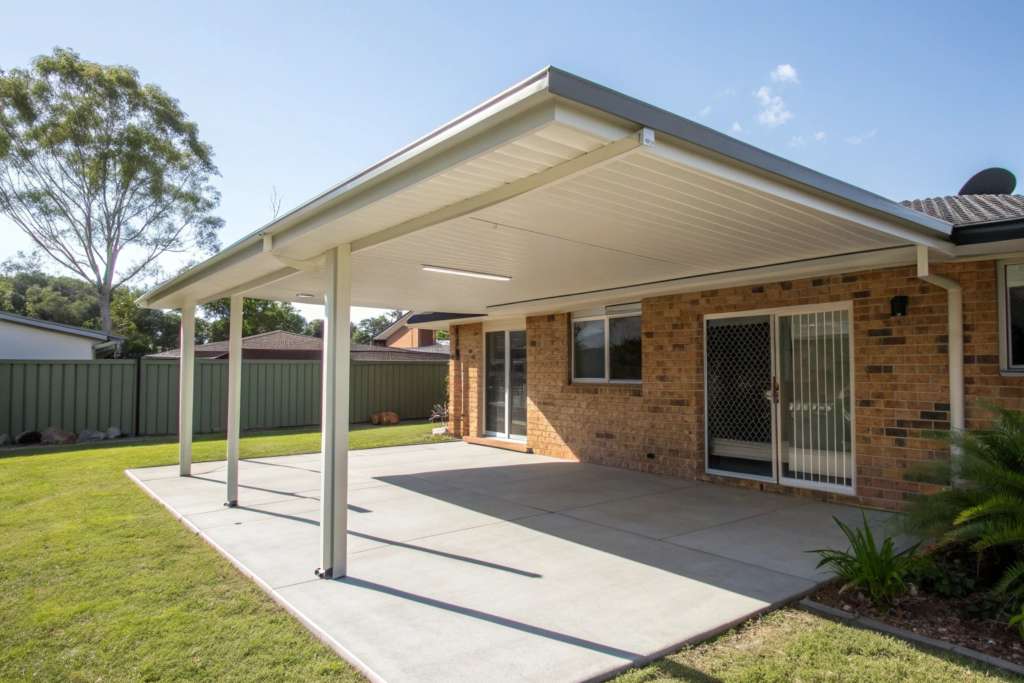
Your Patio as the Foundation for Future Outdoor Living
Most homeowners don’t build their entire outdoor space in one go. They start with the patio, get a feel for how the space works, and then build from there. A patio cover goes on. Privacy screens get added down one side. An outdoor kitchen bench finds its way into the corner. The space evolves as the budget allows and the vision becomes clearer.
That’s exactly how a good patio should be designed — with what comes next already in mind. We build patios that are sized, positioned, and constructed to support whatever the homeowner wants to add later. The slab can handle a cover structure. The layout leaves room for screens or enclosures. Nothing has to be pulled up and redone because the original patio wasn’t built with the bigger picture in mind.
Starting with a properly built patio means every addition after it is easier, cleaner, and more cost effective. It’s the foundation the whole outdoor space gets built on — and getting it right from the beginning makes everything else work better.
What Separates a Patio That Lasts From One That Doesn't
The surface material gets all the attention — and it matters — but the thing that actually determines how long a patio lasts is what happens underneath it. A patio laid on a properly prepared, levelled, and compacted base will hold up for decades. A patio that isn’t? It’ll crack, shift, and start causing problems within a few years regardless of how good the pavers or tiles on top of it look.
Base preparation is where we put serious attention on every job. The ground gets properly excavated, levelled, and compacted before anything goes down. There are no shortcuts taken on this part because the whole surface depends on it.
Drainage is the other thing that separates a patio that performs from one that becomes a headache. Ipswich gets rain — proper summer rain — and the patio surface needs to be graded so water moves away from the house rather than pooling on the surface or running back toward the foundations. We factor drainage into every design from the start, not as an afterthought once the slab is already down.
Patio Design Options to Suit Every Ipswich Property
A patio should fit the property it’s built on — the yard shape, the way the house sits on the block, how the family uses the space, and what the homeowner actually wants to do out there. There’s no single design that works for everyone.
Size and layout come first. A patio needs to be big enough to actually function as a living space — big enough for a table, chairs, a BBQ, and people moving around without it feeling cramped. From there, the shape follows the yard. Some properties suit a clean, wide platform running across the back of the house. Others work better wrapping around a corner or stepping down toward the garden.
How the patio meets the house makes a big difference too. A wide opening from the kitchen or living room pulls the outdoor space into the home rather than keeping it separate. And where the patio meets the garden — whether that’s a clean edge, a step down to the lawn, or a built-in planter — finishes the whole space off properly.

What Separates a Patio That Lasts From One That Doesn’t
The surface material gets all the attention — and it matters — but the thing that actually determines how long a patio lasts is what happens underneath it. A patio laid on a properly prepared, levelled, and compacted base will hold up for decades. A patio that isn’t? It’ll crack, shift, and start causing problems within a few years regardless of how good the pavers or tiles on top of it look.
Base preparation is where we put serious attention on every job. The ground gets properly excavated, levelled, and compacted before anything goes down. There are no shortcuts taken on this part because the whole surface depends on it.
Drainage is the other thing that separates a patio that performs from one that becomes a headache. Ipswich gets rain — proper summer rain — and the patio surface needs to be graded so water moves away from the house rather than pooling on the surface or running back toward the foundations. We factor drainage into every design from the start, not as an afterthought once the slab is already down.
Frequently Asked Questions – Patios Ipswich
Depending on the size and position of the patio, Ipswich City Council rules may apply. We check compliance requirements upfront on every job and let you know exactly what’s needed before any work begins.
Pavers, tiles, and composite decking all perform well in Ipswich’s conditions when installed correctly. The best choice depends on your budget, how the patio will be used, and the overall look you’re going for. We advise on this during the consultation.
Absolutely. We design patios with future additions in mind so the slab size, position, and construction can support a cover structure, screens, or enclosure down the track without needing to redo the original work.
Yes. Sloping blocks are common across Ipswich and surrounding suburbs. Depending on the degree of slope, the solution might be a cut-and-fill approach, a stepped design, or an elevated platform. We assess the site and recommend the right approach.
Get In Touch
To speak with one of our deck builders here at Australia Decks today or to get a free consultation for your project please contact us by phone. We look forward to hearing from you!