
Stunning Multi-Level Decks in Ipswich – Expertly Designed & Built to Impress
Multi-Level Decks in Ipswich
Most Ipswich backyards have a slope, a level change, or an awkward layout that makes a standard flat deck feel like a compromise. You spend months planning, get a quote, and then realise — a single flat platform just doesn’t work with the land you’ve got. So you shelve the whole idea, and another summer goes by with the same tired backyard.
A multi-level deck doesn’t fight your yard — it works with it.
Where a single-level deck forces you to pick one zone and stick to it, a multi-level deck creates something far more interesting. A dining area on the upper level. A relaxed lounge below. A separate space for the kids that’s still in easy sightline from the BBQ. Each level has its own purpose, its own feel — and together they turn your backyard into a destination rather than just an afterthought.
For homeowners across Springfield Lakes, Karalee, Ripley Valley, and Redbank Plains, multi-level deck building in Ipswich is one of the most impressive and practical investments you can make in your property. Our team designs and builds multi-level decks that are engineered for the land, designed for how you actually live, and built to handle everything Ipswich’s climate throws at them — year after year.
If your yard has always felt like a problem to solve, a multi-level deck is the solution you’ve been looking for.

What Is a Multi-Level Deck?
A multi-level deck is an outdoor structure built across two or more connected platforms at different heights, linked by stairs or landings to create distinct zones for living and entertaining. Unlike a single flat deck, each level serves a different purpose — dining, lounging, cooking, or kids’ play — while the whole structure flows together as one cohesive outdoor space.
For Ipswich homeowners with sloping blocks, elevated Queenslanders, or tiered backyards across suburbs like Karalee, Springfield Lakes, and Ripley Valley, a multi-level deck is the smartest way to make full use of your land’s natural contours rather than fighting them with expensive earthworks.
A well-designed multi-level deck delivers:
- Separate entertaining zones without walls or fences
- A natural solution for sloping or uneven ground
- Stronger visual impact than a single-level structure
- Increased property value and year-round outdoor liveability
Why Multi-Level Decks Suit Ipswich Properties
Ipswich isn’t flat. Anyone who’s driven through Karalee, Basin Pocket, or the older streets of Goodna knows that. And even in the newer estates — Springfield Lakes, Ripley Valley, Brookwater — plenty of blocks have enough fall across the yard to make a single flat deck feel forced. That’s not a problem. That’s actually an opportunity, if you build the right way.
Sloping Blocks and Uneven Ground
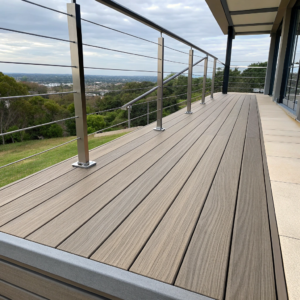
A sloping block is the single biggest reason homeowners in Ipswich end up with a multi-level deck — and it’s also the single biggest reason they hesitate. The common fear is that the slope means more cost, more complexity, more things that can go wrong.
What a well-engineered multi-level deck actually does is use that slope to your advantage. Instead of pouring thousands of dollars into cut-and-fill earthworks to flatten the yard before you even start building, a split-level deck steps down with the land. Each platform sits at a height that makes sense for the terrain. The result is a structure that looks like it belongs there — because it was designed around what’s already there.
Elevated Queenslanders and Split-Level Homes
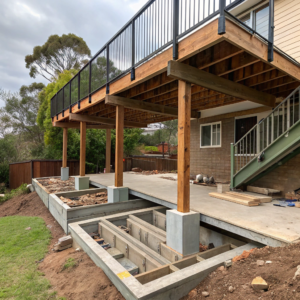
Karalee, Barellan Point, Basin Pocket — these suburbs are full of high-set Queenslanders and older homes that sit well above ground level. For these properties, a multi-level deck isn’t just a nice-to-have. It’s the only layout that actually connects the home to the yard in a way that makes sense.
A single platform accessed from the back door leaves you either too high off the ground or forces a long, awkward stair run straight to the lawn. A multi-level design solves that by stepping down in stages — a main entertaining deck off the living area, a mid-level landing, and stairs to the lower yard. Each transition feels natural. Each level gets used.
Making the Most of Ipswich’s Outdoor Lifestyle
Ipswich summers are brutal. Temperatures pushing 40°C, afternoon sun hammering west-facing backyards, humidity that makes you feel like you’re breathing through a wet towel. But Ipswich winters? They’re genuinely beautiful. Mild days, clear skies, the kind of weather that makes you want to be outside every weekend from May through August.
A multi-level deck built for this climate gives you options. Upper levels with pergola integration for summer shade. Lower open platforms that catch the winter sun. Enough space across the levels to move the gathering around, depending on the time of day and time of year. That’s outdoor living that actually works for Ipswich — not just for the two weeks a year when the weather is perfect.
How We Design Your Multi-Level Deck
Good design starts with your yard, your life, and how you actually use your outdoor space.
Understanding How You Live and Entertain: Before we draw a single line, we ask the right questions. How many people do you regularly host? Do the kids need their own zone? Where does the afternoon sun hit? Your answers shape every decision we make.
Planning Levels, Transitions, and Sightlines: Every level needs a reason to exist and a logical connection to the next. We plan each platform height, stair placement, and landing so the deck flows naturally and sightlines from the BBQ to the kids’ area are never broken.
Sun, Shade, and Ipswich’s Climate: Ipswich afternoons get brutal from November through March. We design with that in mind — positioning levels to work with pergola integration, maximising winter sun on lower platforms, and keeping high-traffic zones out of the worst of the western sun.
How the Deck Connects to Your Home: The deck should feel like a natural extension of your living space, not something bolted on as an afterthought. We plan every connection point — door thresholds, floor height transitions, and sight lines from inside — so indoors and outdoors flow seamlessly together.

Material Choices for Multi-Level Decks
The material you choose affects how your deck looks, performs, and holds up over the next decade.
Timber — Merbau and Hardwood
Merbau remains one of the most popular decking timbers in Ipswich for good reason. It's dense, naturally oil-rich, and holds up well in Queensland's heat and humidity. Spotted Gum and other Australian hardwoods are worth considering too — harder wearing than Merbau in high-traffic areas and with a tighter grain that resists cupping and movement in Ipswich's humid summers.
Composite Decking — ModWood and Ekodeck
For time-poor Ipswich families who want a premium result without the annual maintenance commitment, composite is the obvious answer. ModWood and Ekodeck boards are termite-proof, UV-stabilised, and won't splinter underfoot — which matters when kids are running barefoot around a pool deck or lower platform. The upfront cost is higher than timber, but factor in zero oiling, zero sanding, and a 25-year product warranty and the numbers look very different over a decade.
Mixing Materials Across Levels
One of the advantages of a multi-level design is that you're not locked into a single material across the whole structure. A Merbau upper deck paired with composite on the lower pool-level platform is a practical and popular combination — timber warmth where you want it, low-maintenance performance where it gets the most punishment. We'll talk through what makes sense for each level based on use, exposure, and your budget.
What a Multi-Level Deck Can Do That a Single Deck Can't
A single deck gives you one space. A multi-level deck gives you a whole outdoor environment.
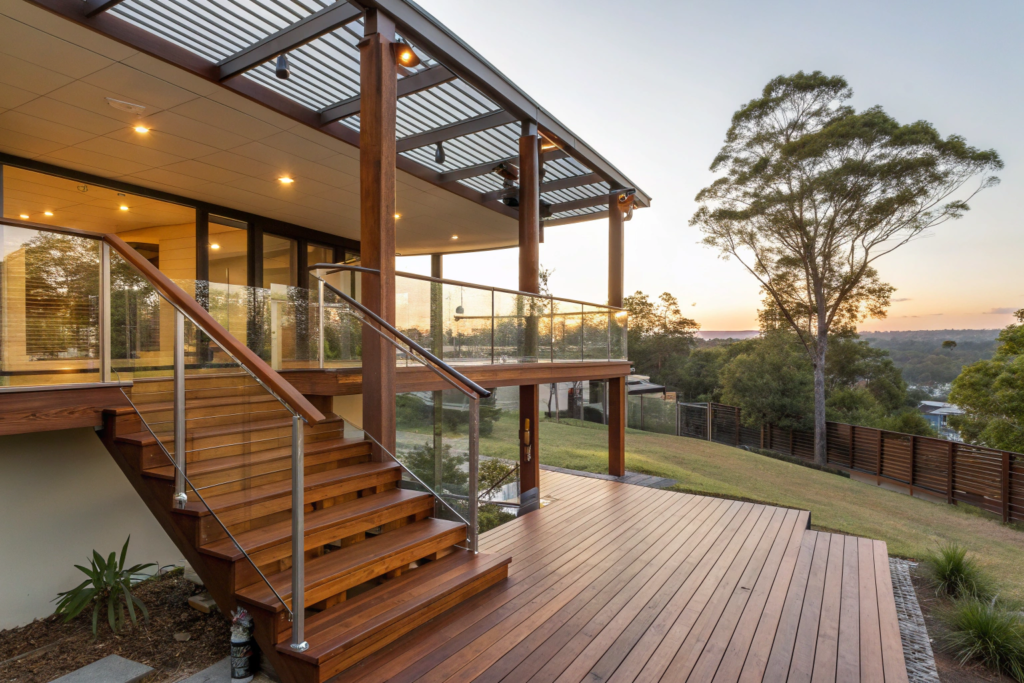
Creating Distinct Zones Without Walls: Each platform becomes its own defined area — dining up top, lounging below, kids’ space at the bottom — without a single fence or dividing wall breaking up the flow of the yard.
Flow-Through Entertaining Across Levels: People spread naturally across levels when there’s somewhere to go. Adults settle near the BBQ, kids drift down to the lower platform, and the whole yard gets used instead of everyone crowding one spot.
Visual Impact and Street Appeal: Layered platforms, stair runs, and balustrades create a structure that reads as deliberate and impressive. For Ipswich properties, a well-built multi-level deck adds genuine kerb appeal and real value at resale.
Engineering and Structural Integrity
A multi-level deck is only as good as what’s holding it up underneath.
Substructure Design for Sloping Ground: Sloping blocks need more than standard bearer and joist layouts. We engineer the substructure to suit the specific fall of your land — varying post heights, adjusting bearer spans, and designing for the load distribution that a tiered structure demands.
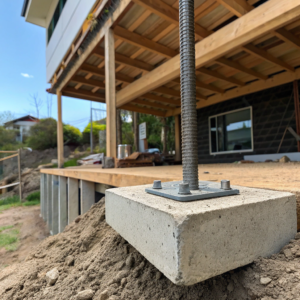
Footings, Posts, and Load-Bearing Connections: Every post sits on a concrete footing sized for the load it carries. Connection hardware is specified for Queensland conditions — galvanised or stainless, where moisture and humidity demand it. Nothing is undersized, nothing is guessed at.
Built to Last in Queensland Conditions: Ipswich summers bring heat, humidity, driving rain, and storms that test every joint and fixing in a structure. We build to Queensland standards with materials and methods that account for timber movement, corrosion exposure, and the kind of weather that separates a well-built deck from one that starts failing in year three.
Safety, Balustrades, and Council Compliance
Get the safety and approval side wrong, and it doesn’t matter how good the deck looks.
Any platform over one metre high requires a compliant balustrade — minimum one metre tall, balusters spaced no more than 125mm apart. These are building code requirements. A deck built without them won’t pass inspection and can’t be signed off.
Compliance doesn’t mean boring. Horizontal timber slats, stainless wire, or frameless glass — the right balustrade choice pulls the whole structure together and turns a safety requirement into one of the deck’s strongest visual features.
Most elevated and multi-level decks in Ipswich require building approval before construction starts. We handle the assessment, documentation, and lodgement so you’re not left sorting council requirements on your own.
What to Expect When You Build With Us
From first call to finished deck, here’s exactly how the process works.
Free Design Consultation and Site Assessment
We start with a visit to your property — no charge, no obligation. We look at the land, talk through how you want to use the space, and give you honest feedback on what’s possible for your block and your budget.
Transparent Quoting and Project Timeline
Every quote we provide is fully itemised — materials, labour, council fees, and any site-specific requirements broken out clearly. No vague lump sums, no surprises halfway through the build. You’ll also get a committed project timeline with a start date and a completion date before we break ground.
Our Workmanship and Quality Standards
Every multi-level deck we build is constructed to Queensland building standards with materials specified for the site and the climate. We don’t cut corners on substructure, fixings, or finishes — because a deck that looks great on day one but starts failing in year three isn’t a result we’re prepared to put our name on.
Frequently Asked Questions About Multi-Level Deck Building in Ipswich
Most multi-level decks in Ipswich range from $25,000 to $55,000, depending on size, materials, number of levels, and site complexity. Sloping blocks and elevated Queenslanders typically sit at the higher end due to substructure requirements. We provide fully itemised quotes, so you know exactly where every dollar goes.
In most cases, yes. Elevated and multi-level decks generally require a building approval from Ipswich City Council before construction starts. We handle the entire approval process — assessment, documentation, and lodgement — so you don’t have to deal with it yourself.
Most multi-level deck builds take between two and four weeks on site, depending on size and complexity. We’ll give you a committed start date and completion date in your quote so you can plan around it.
Both Merbau timber and composite decking perform well in Ipswich conditions. Timber costs less upfront but requires regular oiling. Composite costs more initially but needs virtually no maintenance and is termite-proof — which matters a lot in Southeast Queensland. We’ll help you weigh up the right choice for your budget and lifestyle.
That’s actually where a multi-level design works best. We engineer the substructure specifically for the fall of your land, stepping platforms down with the slope rather than fighting it with earthworks. Sloping blocks are our most common multi-level deck project.
Any platform more than one metre above ground level requires a compliant balustrade under the Queensland building code. Lower platforms that sit under that threshold don’t require them, though we’ll always advise what’s needed for your specific design during the consultation.
Absolutely — and for most Ipswich properties we’d recommend it. A pergola integrated into the upper level creates usable shade during summer and makes the whole structure feel like a complete outdoor room rather than just a deck. We design and build deck and pergola combinations as a single integrated project.
Get Your Free Multi-Level Deck Quote
If your Ipswich backyard has always felt like a problem — too sloped, too awkward, too hard to entertain in — a multi-level deck is the answer. We design and build split-level decks across Springfield Lakes, Karalee, Ripley Valley, Redbank Plains, Yamanto, and Goodna.
Call us today or submit an enquiry below.
- 📞 0735558933
- 📍 Servicing: Springfield Lakes, Karalee, Ripley Valley, Redbank Plains, Yamanto, Goodna
- ⏱ We respond within 1 business day