
Beautiful Ground-Level Decks in Ipswich – Simple, Stylish & Built to Last
Ground-Level Decking in Ipswich
There’s a reason ground-level decks are the most popular choice for Ipswich homeowners. No stairs, no fuss, no unnecessary complexity — just a seamless step from your living room into the backyard, and suddenly your outdoor space feels like part of your home.
At Ipswich Decking, we build ground-level decks right across the region — from Springfield Lakes and Ripley Valley through to Karalee, Redbank Plains, and everywhere in between. We build them to handle Queensland’s heat, humidity, and the chaos of everyday family life.
Whether you’re starting with a blank backyard or replacing a tired old patio, a ground-level deck is one of the best investments you can make in your home and your lifestyle. Get in touch for a free quote today.
How Much Does a Ground-Level Deck Cost in Ipswich?
Ground-level decks in Ipswich generally cost between $350 and $800 per square metre, depending on the materials you choose and the size of the deck. Here’s a simple breakdown of what most Ipswich homeowners pay:
| Material | Cost Per m² | What You’re Getting |
|---|---|---|
| Treated Pine | $350–$480/m² | Most affordable option — solid, great-looking, and suits most backyards |
| Merbau Hardwood | $480–$620/m² | Most popular timber in Queensland — rich colour and long-lasting durability |
| Composite (ModWood/Ekodeck) | $620–$800+/m² | Costs more upfront but never needs oiling or sanding, handles moisture better at ground level |
What does that look like in real dollars?
- 15m² treated pine deck: from $5,250
- 20m² Merbau deck: from $9,600
- 25m² composite deck: from $15,500
All prices include materials and installation. Ground-level decks are usually the most affordable type to build — and many don’t require council approval, which saves you even more.
Every job is different. Contact Ipswich Decking for a free quote specific to your home.
Why Ground-Level Decks Are the Most Popular Choice in Ipswich
Ask any deck builder in Ipswich what they build most, and the answer’s almost always the same — ground-level decks. And it’s not hard to see why.
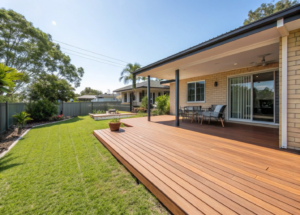
They Work for the Whole Family
No steps for toddlers to tumble down, no barriers between inside and outside, no awkward transitions when you’re carrying food out to the BBQ. For families across Springfield Lakes, Ripley Valley, and Redbank Plains, that accessibility matters every single day — and for older family members, it means never negotiating stairs just to enjoy the backyard.
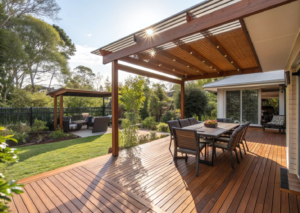
They Suit Almost Any Backyard
Flat block in a new estate? Ground-level deck. Established backyard in Goodna or Yamanto with a bit of slope? Still works beautifully with the right substructure. Pool that needs a proper surround? Ground level is almost always the starting point. They’re flexible enough to fit what you’ve actually got.
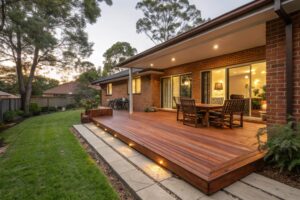
They’re the Most Affordable Way to Add Outdoor Living Space
Less complexity means lower cost. No tall posts, no staircase design, no engineer sign-off in most cases. For Ipswich homeowners who want maximum outdoor living space without blowing the budget, a ground-level deck delivers the best return on every dollar spent.
What Goes Into Building a Ground-Level Deck Properly
A ground-level deck might look simple from above. But what’s happening underneath is what separates a deck that lasts 25 years from one that starts causing problems in five.
The Substructure — What’s Happening Under Your Feet
The substructure is the framework of bearers and joists that everything sits on. Get this wrong, and it doesn’t matter how good your decking boards look — you’ll end up with bounce, movement, and boards that cup and split ahead of schedule. We size our substructure to the load, the span, and the material going on top, every single time.
How the Footings Are Set
Footings are what connect your deck to the ground. For ground-level builds in Ipswich, we typically use concrete pier footings set below the surface — deep enough to stay stable through Queensland’s wet seasons and dry spells. Getting footing depth and placement right from the start means your deck won’t shift, sink, or move over time.
Why the Build Quality Matters as Much as the Looks
A deck that looks beautiful on day one but hasn’t been built correctly will show its problems within a few years — especially in Ipswich’s climate. Correct joist spacing, proper fastening systems, the right fixings for the timber species, and attention to drainage all happen before a single decking board goes down. That’s the work that makes the difference.

Design Options for Your Ground-Level Deck
A ground-level deck doesn’t have to be a plain rectangle bolted onto the back of your house. The best ones are designed around how your family actually lives — and there’s a lot more flexibility here than most people realise.
Shapes and Layouts
Square and rectangular decks are the most common because they're the most cost-effective to build. But L-shaped layouts work brilliantly for wrapping around a corner of the house, and wraparound designs are popular in Karalee and Barellan Point for connecting multiple outdoor zones. The shape you choose should follow your backyard, not fight it.
Built-In Features Worth Considering
Built-in bench seating eliminates the need for outdoor furniture that blows around in summer storms. Planter boxes along the edge define the space without fencing it off. Integrated steps down to the lawn, a spot for the BBQ station, or even a dedicated zone for the kids — these details are easier and cheaper to plan in from the start than add later.
How Your Deck Can Connect to the Garden
The best ground-level decks don't just sit in the backyard — they flow into it. Laying the deck boards in a direction that draws the eye toward the garden, using edge detailing to create a clean boundary between deck and lawn, or stepping the deck down into a garden bed can turn a simple build into something that looks like it was always meant to be there.
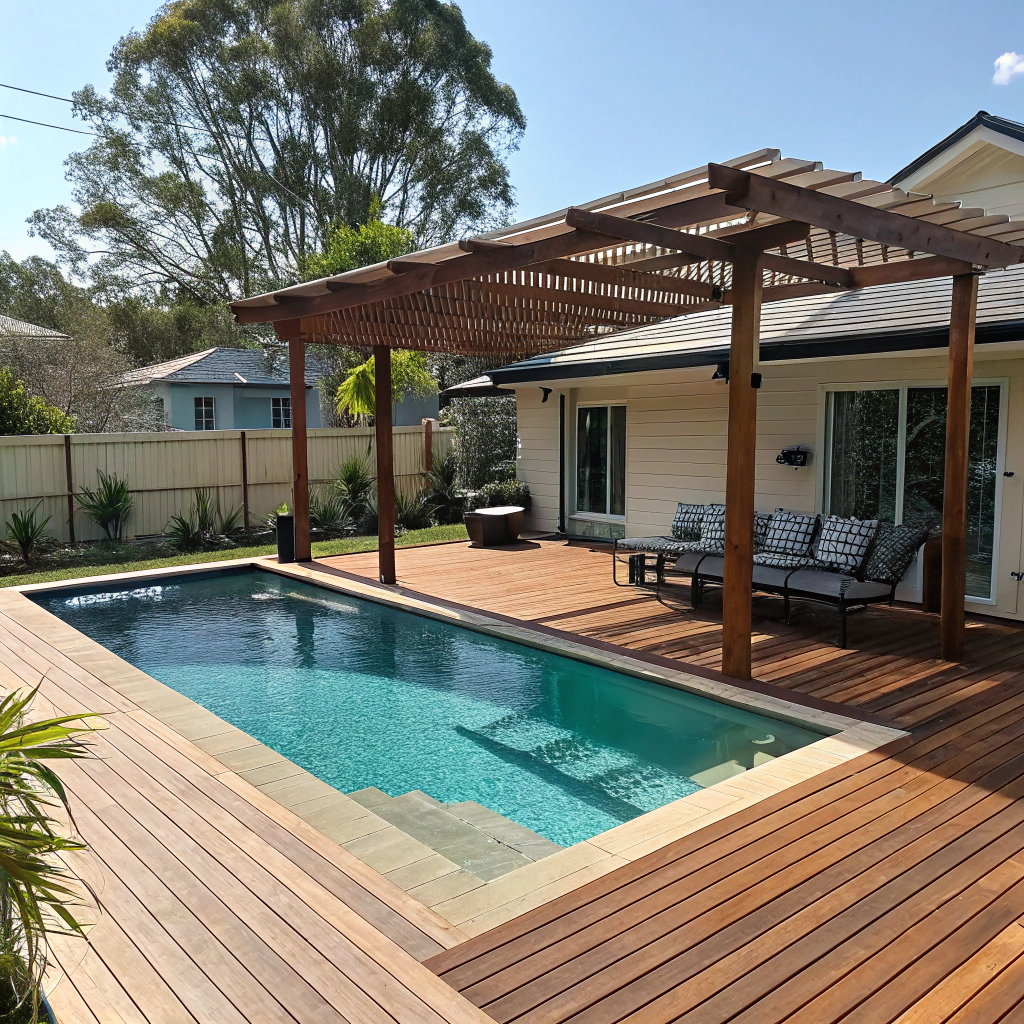
Moisture and Ventilation at Ground Level
Moisture is the biggest threat to any ground-level deck — and in Ipswich’s humid summers, it has to be managed from day one of the build.
Why Ground-Level Decks Need Special Attention
The closer a deck sits to the ground, the less airflow moves underneath. Moisture builds up, timber stays damp after rain, and deterioration starts from the bottom up — long before you’d notice it from above.
How Ipswich Decking Handles It
Every build is designed with ventilation and drainage in mind from the start — correct height above ground, proper grading underneath, ground-contact rated timber, and composite boards with built-in drainage channels where specified.
Choosing the Right Materials for a Ground-Level Deck
The material you choose affects how your deck looks, how long it lasts, and how much work you’ll put into maintaining it over the years. Here’s what you need to know.
Timber Options
Treated pine is the most budget-friendly starting point — it takes paint or stain well and suits most standard backyard builds. Merbau hardwood is the most popular choice in Queensland for good reason — rich reddish-brown colour, naturally dense, and built to handle the climate. Both require periodic oiling to stay looking their best.
Composite Decking
Composite decking like ModWood or Ekodeck costs more upfront, but removes the maintenance question entirely. No oiling, no sanding, no annual weekend spent on upkeep. For time-poor Ipswich families who both work full-time, that trade-off makes a lot of sense — especially at ground level, where moisture exposure is higher.
Which Material Is Right for You
Tight budget — go treated pine. Want the classic Queensland timber look with proven durability — Merbau is hard to beat. Want zero maintenance and termite-proof peace of mind — composite is worth every extra dollar. We’ll walk you through the options during your free quote and help you make the right call for your backyard, your lifestyle, and your budget.
Council Approval for Ground-Level Decks in Ipswich
One of the most common questions we get is whether a ground-level deck needs council approval. The answer depends on a few key factors — here’s how it works in Ipswich.
When You Don’t Need Approval
Most standard ground-level decks don’t require development approval. If your deck sits under 1 metre high, meets boundary setbacks, and falls within the exempt provisions of Ipswich City Council’s planning scheme, you’re good to go.
When You Do Need Approval
Larger decks, flood-affected areas, bushfire overlay zones, or builds close to boundaries may trigger formal approval. Heritage properties in older suburbs like Booval and Newtown have additional considerations worth checking.
How Ipswich Decking Handles the Process
We assess your property against current council requirements before anything starts. If approval is needed, we manage the entire process — no planning documents for you to figure out alone.
Why Ipswich's Climate Makes Ground-Level Decks the Smartest Outdoor Build
Ipswich isn’t Sydney. It isn’t Melbourne. It’s one of the hottest, most humid, and most storm-affected cities in South East Queensland — and that changes everything about how you should build outdoor living spaces.
Summer temperatures regularly hit 38–42°C across Springfield Lakes, Ripley Valley, and Redbank Plains. Humidity sits high from November through March. Storms roll through fast and hit hard. And the afternoon western sun punishes any outdoor space that hasn’t been designed with Queensland’s conditions in mind.
Ground-level decks handle all of this better than most people expect. Because they sit close to the ground, they’re naturally easier to shade with a pergola or sail. Because they don’t rely on tall post structures, they’re more stable in high winds. And because they can be built with materials specifically rated for Queensland’s UV exposure and moisture levels, they hold up year after year without the constant maintenance battle that catches a lot of homeowners off guard.
Building in Ipswich means building for Ipswich. That’s exactly how we approach every ground-level deck we build.
Frequently Asked Questions About Ground-Level Deck Building in Ipswich
Most ground-level decks take between 2 and 5 days to build, depending on size and materials. We’ll give you a confirmed timeline before we start.
Most standard ground-level decks don’t need approval. We assess your property against current Ipswich City Council requirements before anything starts and let you know exactly where you stand.
Not necessarily. We just need access to the site. Most of our customers are at work during the day and come home to a finished deck.
Treated pine typically lasts 15–25 years with basic maintenance. Merbau hardwood can last 25–40 years. Composite decking carries product warranties of up to 25 years.
We use treated timber rated for in-ground contact and termite exposure. Composite decking is fully termite-proof. We’ll recommend the right product for your situation.
Merbau is a natural hardwood that looks beautiful but needs periodic oiling. Composite costs more upfront but requires zero maintenance and handles ground-level moisture better long term.
Yes. We design ground-level decks around what’s already there — existing slabs, garden beds, pools, and trees are all workable.
Ready to Build Your Ground-Level Deck in Ipswich?
A great outdoor space doesn’t happen by accident — it starts with one conversation. Whether you’ve got a clear vision or you’re still figuring out what you want, we’re here to help you make the right call for your home, your family, and your budget.
Here’s how it works:
- Step 1: Contact us for a free quote, and we’ll arrange a site visit at a time that suits you
- Step 2: We’ll walk through your design options, material choices, and give you a detailed written quote within 24 hours
- Step 3: Once you’re happy, we lock in your confirmed start date and get to work
We build ground-level decks across Ipswich — Springfield Lakes, Ripley Valley, Karalee, Redbank Plains, Yamanto, Goodna, and everywhere in between.
Get your free quote today — we’ll get back to you within 24 hours.